


Tips for Improving Website Loading Speeds
Why website loading speed is important?
Website loading speed is crucial for various reasons:- User Experience: Users are likely to get impatient and quit a website if it takes too long to load. A poor user experience caused by a slow website may reduce traffic, engagement, and conversion rates.
- Search Engine Optimization (SEO): Google and other search engines give priority to websites that load quickly because site quality is a key factor in getting a high ranking on search engine results. In search engine results, slow websites are less likely to perform well, which can have a negative effect on traffic and visibility.
- Mobile optimization: Having a fast-loading, mobile-friendly website is essential because now the majority of web traffic is coming from mobile devices. Slow mobile websites not only provide users with a bad experience, but they also affect their ranks in search engines.
- Conversion Rates: Users are more likely to engage with and make purchases on a website that loads quickly, which can increase conversion rates. On the other hand, a slow website can drive away visitors or frustrate them, which will lower conversions and sales.
Tips for improving website loading speeds
Here are some tips for improving website loading speeds: Image optimization: Image optimization is essential as large images can cause a website to load much more slowly. Make sure to optimize images by compressing them while maintaining their quality.- Reduce HTTP requests: HTTP requests are made for each resource on your website, including images, scripts, and stylesheets. Consolidate CSS and JavaScript files, use sprites, and eliminate unused resources to reduce the number of HTTP requests.
- Reduce server response time: The amount of time it takes the server to react to a request might affect how quickly your website loads. Utilize a content delivery network (CDN), caching, and fewer database queries to improve server response time.
- Use a content delivery network (CDN): By distributing content among several servers, a CDN helps to improve the loading speed of websites. As a result, the loading times will be faster due to the reduced distance between the user and the server.
- Use a cache plugin: Caching can help improve website loading speeds by storing frequently accessed data and serving it to users quickly. To improve website performance and reduce server load, use a caching plugin.
- Minimize JavaScript and CSS files: Large JavaScript and CSS files should be kept to a minimum size because they can slow down a website’s loading time. Reduce those files by removing the unnecessary extra code and whitespace.
- Optimize Web fonts: Web fonts should be optimized because they can also affect website loading speeds. Optimize the web fonts with appropriate font weights and styles and limit the number of fonts used.
Conclusion
Overall, website loading speed is a critical factor that helps to provide a positive user experience, optimize for search engines, and increase conversion rates. However, you can increase your website loading times by optimizing images, reducing HTTP requests, decreasing server response time, caching, minimizing CSS and JavaScript files, and optimizing web fonts. By giving priority to your website’s loading speed, you may boost user interaction, improve search engine exposure, and increase the website conversion rate, which helps boost your business growth.
The Importance of User Experience (UX) Design in Web Development
The process of building and managing websites on the Internet is known as Web Development. Web design, web content development, client-side scripting, server-side scripting, and network security settings are among the tasks that are involved. To build websites that are useful, interactive, and aesthetically pleasing to users, web developers use a variety of programming languages, including HTML, CSS, JavaScript, PHP, and many others. Additionally, they make sure that websites are user-friendly and SEO-friendly. In general, web development is important in the digital world because it enables individuals and companies to establish an online presence and connect with a wider audience.
The Importance of User Experience (UX) Design in Web development of website or web application
User Experience (UX) Design is vital for web development since it intends to give users a satisfying experience while accessing a website or web application. The success of a website or web application may be impacted by the way visitors perceive and interact with it. This can be changed significantly by a well-designed user interface.Here are a few reasons why UX design is crucial in website creation:
- Enhances Usability:The goal of UX design is to create intuitive, user-friendly interfaces that make it easier for visitors to explore a website or web application. Users will be more likely to stay on a website longer and have a better experience if the UX design of a website or web application is improved.
- Increases User Satisfaction: By providing a good user experience, users are more likely to be satisfied with the website or web application of a business and may be more likely to visit it repeatedly or suggest it to others.
- Improves Brand Reputation: A well-designed user experience website or web application can improve a brand’s reputation by establishing a positive impression in the user’s mind. This may help in setting a brand apart from competitors and establishing brand awareness.
- Increased Conversion Rates: If your website or web applications have a feature-rich user interface, users are more likely to perform a desired action (such as visiting your website or applications frequently, making a purchase, filling out a form, etc.). So a seamless user interface helps increase conversion rates and grows your business.
- Reduce Development Costs: UX design can help minimize development costs by identifying probable issues early in the design process and fixing them.
Conclusion:
Overall user experience (UX) design is a vital component of web development that shouldn’t be ignored. It focuses on designing user-friendly, intuitive user interfaces that give users a satisfying experience while engaging with a website or web application. A superb user experience can boost brand perception, boost user satisfaction, raise conversion rates, and reduce development costs. UX design should therefore be regarded as an essential component of every web development project in order to ensure that the final outcome offers an effective and successful user experience.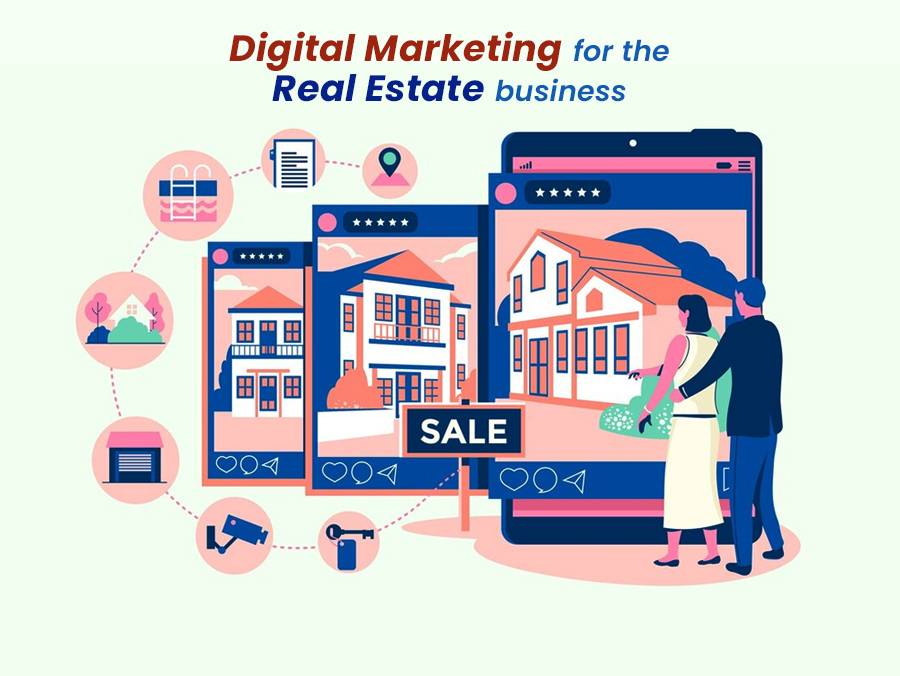
Why is digital marketing important for the real estate business?
Digital marketing is important for real estate as it allows real estate professionals to reach a large and targeted audience through various online platforms and channels. This includes search engines, social media, email marketing, and websites. With the growing number of people using the internet to research and search for properties, digital marketing provides an effective way to showcase listings, build brand awareness, and generate leads. Additionally, digital marketing provides real estate professionals with data and analytics to measure the effectiveness of their marketing efforts, enabling them to make informed decisions and continuously improve their marketing strategies.
Why is Digital Marketing important for the real estate business?
Many people are looking for information using search engines.
Everyone nowadays (more than ever) uses a search engine to find almost any piece of information. Nobody wants to waste time asking a friend or next-door neighbour for information when a smartphone or computer can get it in a matter of minutes. As a result, you should establish an online presence to increase brand visibility. After all, this is where your leads congregate, and you don’t want them to miss you in their searches.Effectiveness of video and mobile marketing in Real Estate Industry
Video and mobile marketing can be highly effective for real estate. Video marketing allows real estate professionals to showcase properties in a dynamic and engaging way, providing potential buyers with a virtual tour of the property and allowing them to see the property’s features and layout before visiting in person. Mobile marketing is also important as an increasing number of people use their mobile devices to search for properties. A mobile-friendly website, SMS marketing, and push notifications are effective ways to reach potential buyers and keep them updated on new listings and other real estate news. In both video and mobile marketing, it’s important to focus on delivering high-quality, relevant content that provides value to potential buyers. This will help build trust and establish the real estate professional as a trusted and knowledgeable source in their market.Online reviews are important.
Yes, online reviews are important in real estate, as they can greatly impact a potential buyer’s decision-making process. Online reviews provide prospective buyers with insights into a real estate professional’s past performance and reputation, helping them to determine if the professional is trustworthy and reliable. Positive reviews can also help increase the visibility of a real estate professional’s brand and listings, while negative reviews can have the opposite effect. As such, it’s important for real estate professionals to actively manage their online reputation by responding to both positive and negative reviews in a professional and timely manner. Overall, online reviews play a significant role in the success of a real estate professional’s digital marketing efforts and should be incorporated into their overall strategy.Ease of performance tracking
The ease of performance tracking is one of the key advantages of digital marketing in real estate. Digital marketing provides real estate professionals with data and analytics that allow them to track the performance of their marketing efforts in real-time and make informed decisions based on this information. For example, website analytics can provide information on website traffic, sources of traffic, and conversion rates, allowing real estate professionals to track the effectiveness of their website and identify areas for improvement. Similarly, email marketing software can track open rates, click-through rates, and conversion rates, helping real estate professionals determine the success of their email campaigns and adjust their strategy accordingly. In addition, most digital marketing channels and platforms provide real estate professionals with detailed reports and analytics that can help them measure the effectiveness of their campaigns, understand their target audience, and make data-driven decisions to improve their marketing results. Overall, the ease of performance tracking is a key advantage of digital marketing in real estate and provides real estate professionals with the information they need to continuously improve their marketing efforts.Easier to reach the target audience.
Yes, digital marketing makes it easier for real estate professionals to reach their target audience. With digital marketing, real estate professionals can use various online platforms and channels to target specific demographics, interests, and behaviors, increasing the chances of reaching the right people with their message. For example, social media advertising allows real estate professionals to target users based on factors such as age, location, interests, and behavior, enabling them to reach a highly targeted audience. Similarly, search engine advertising and search engine optimization (SEO) can help real estate professionals reach potential buyers who are actively searching for properties in their area. In addition, email marketing and SMS marketing allow real estate professionals to target individuals who have previously expressed interest in their services or properties, making it easier to reach a highly engaged and interested audience. Overall, digital marketing provides real estate professionals with the tools and capabilities they need to reach their target audience and connect with potential buyers more effectively.Freedom to go paperless
Yes, digital marketing allows real estate professionals to go paperless, reducing their reliance on traditional print materials and streamlining their marketing efforts. By utilizing digital marketing channels such as websites, email marketing, and social media, real estate professionals can reach potential buyers with property listings, news, and updates without having to produce and distribute physical materials. This can save time and resources, as well as reducing their environmental impact. In addition, digital marketing provides real estate professionals with the ability to store and access all of their marketing materials and data in one central location, making it easier to track and manage their marketing efforts. This includes property listings, client information, and marketing performance data, among other things. Overall, digital marketing offers real estate professionals the freedom to go paperless, streamlining their marketing efforts and reducing their impact on the environment.Multiple opportunities to get creative
Yes, digital marketing offers real estate professionals multiple opportunities to get creative and stand out in a competitive market. With digital marketing, real estate professionals can use various online platforms and channels to showcase their properties and services in new and innovative ways. For example, they can create engaging and interactive virtual tours of properties using video, 360-degree photography, and augmented reality. They can also use social media to share behind-the-scenes content and share their personal brand story, helping to build trust and establish a connection with potential buyers. In addition, digital marketing provides real estate professionals with the opportunity to use data and analytics to inform and optimize their marketing strategies, allowing them to continuously improve their results and stay ahead of the curve. Overall, digital marketing offers real estate professionals multiple opportunities to get creative and differentiate themselves in a crowded market, helping them to connect with potential buyers and achieve their business goals.Strategies that realtors can use to increase lead generation
Real estate professionals can use the following strategies to maximize leads:-
Optimize their website:
A well-designed, user-friendly website is crucial for attracting and converting leads. Real estate professionals should ensure their website is optimized for search engines, mobile devices, and user experience. -
Use targeted advertising:
Utilize targeted advertising to reach potential buyers who are actively searching for properties in their area. This can be done through search engine advertising, social media advertising, and other targeted advertising platforms. -
Create valuable content:
Provide potential buyers with valuable and informative content, such as property listings, neighborhood information, and home buying tips. This will help build trust and establish the real estate professional as a knowledgeable and trustworthy source in their market. -
Utilize email marketing:
Email marketing is a powerful tool for nurturing leads and staying in touch with potential buyers. Real estate professionals should create email campaigns that provide valuable content and updates, and segment their email list to ensure they are sending relevant content to each individual. -
Engage with social media:
Social media is a great way to reach potential buyers and engage with the local community. Real estate professionals should regularly post relevant and valuable content, respond to comments and messages, and utilize social media advertising to reach a wider audience. -
Ask for referrals:
Encourage satisfied clients to refer friends and family to the real estate professional. This can be done by offering incentives, such as discounts on future services, or simply by asking for a referral at the end of a successful transaction. -
Continuously track and analyze results:
Continuously track and analyze the results of their marketing efforts, and use this information to inform and optimize their strategy. This will help real estate professionals identify what is working and what is not, and make data-driven decisions to improve their results over time.
Conclusion
In summary, digital marketing is important for real estate professionals as it offers many benefits, including increased reach to the target audience, easier performance tracking, the ability to go paperless, and multiple opportunities for creativity. Some strategies real estate professionals can use to maximize leads include optimizing their website, using targeted advertising, creating valuable content, utilizing email marketing, engaging with social media, asking for referrals, and continuously tracking and analyzing results. These strategies will help real estate professionals attract and convert more leads, grow their business, and achieve their goals.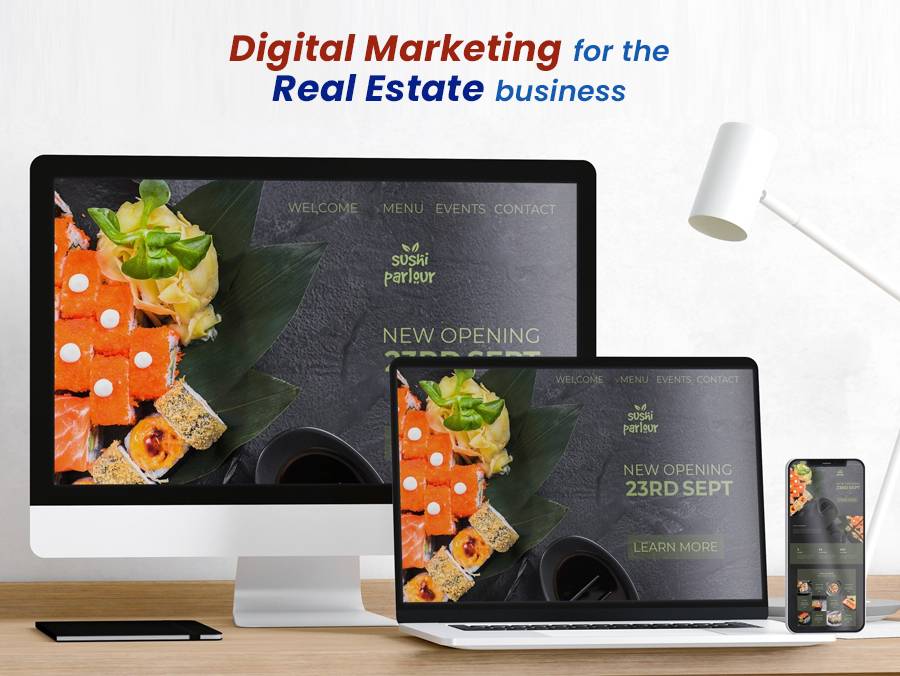
Importance of Responsive website for online businesses: in-depth analysis
What is Responsive website for online businesses?
A responsive website is a type of website design that adjusts its layout and content to fit the screen size and resolution of the device being used to access it. This ensures that the website is optimised for viewing on multiple devices, including desktops, laptops, tablets, and smartphones, providing a consistent and user-friendly experience for visitors. This is especially important for online businesses, as more and more consumers are using mobile devices to browse the web and make purchases online. A responsive website can lead to increased engagement, lower bounce rates, and improved conversions, helping to drive the success of the business.Why is a responsive website so important for online businesses?
Responsive websites are important for online businesses because they provide a better user experience for visitors accessing the site from different devices such as desktops, laptops, tablets, and smartphones. A responsive website automatically adjusts its layout and content to fit the screen size and resolution of the device being used, making it easier to read, navigate, and interact with the site. This can lead to increased engagement, lower bounce rates, and improved conversions for the business. Additionally, search engines favor mobile-friendly websites, so a responsive site can also have a positive impact on search engine optimization (SEO) and improve a business’s visibility online.How do I build a responsive website?
To build a responsive website, the following steps can be followed:Start with a flexible layout:
Use a grid-based design and CSS media queries to create a flexible layout that can adapt to different screen sizes and resolutions.Use flexible images and media:
Ensure that images and other media elements scale proportionally to the size of the viewport to prevent them from becoming too small or large on different devices.Design for touch:
Make sure that the site is optimised for touch input and can be easily navigated on mobile devices using fingers.Optimize for speed:
reduce the size of images and other media and use lazy loading to ensure that the site loads quickly on all devices.Test on different devices:
Use different devices and screen sizes to test the site and ensure that it is working correctly and providing a good user experience on all devices.Use responsive frameworks:
Utilize responsive frameworks such as Bootstrap or Foundation to make the development process easier and more efficient.
Who can help with making a responsive website?
There are several professional services and individuals, who can help with making a responsive website, including:-
Web design companies:
Companies specialising in web design and development can help you create a custom, responsive website that meets your specific needs and requirements. -
Freelance web designers:
Independent web designers and developers who work on a project basis can also help you build a responsive website. -
Website builders:
Tools like Wix, Squarespace, and WordPress allow you to create a responsive website with pre-made templates without the need for coding knowledge. -
In-house web development team:
If you have an in-house web development team, they can help you build a responsive website as well.